
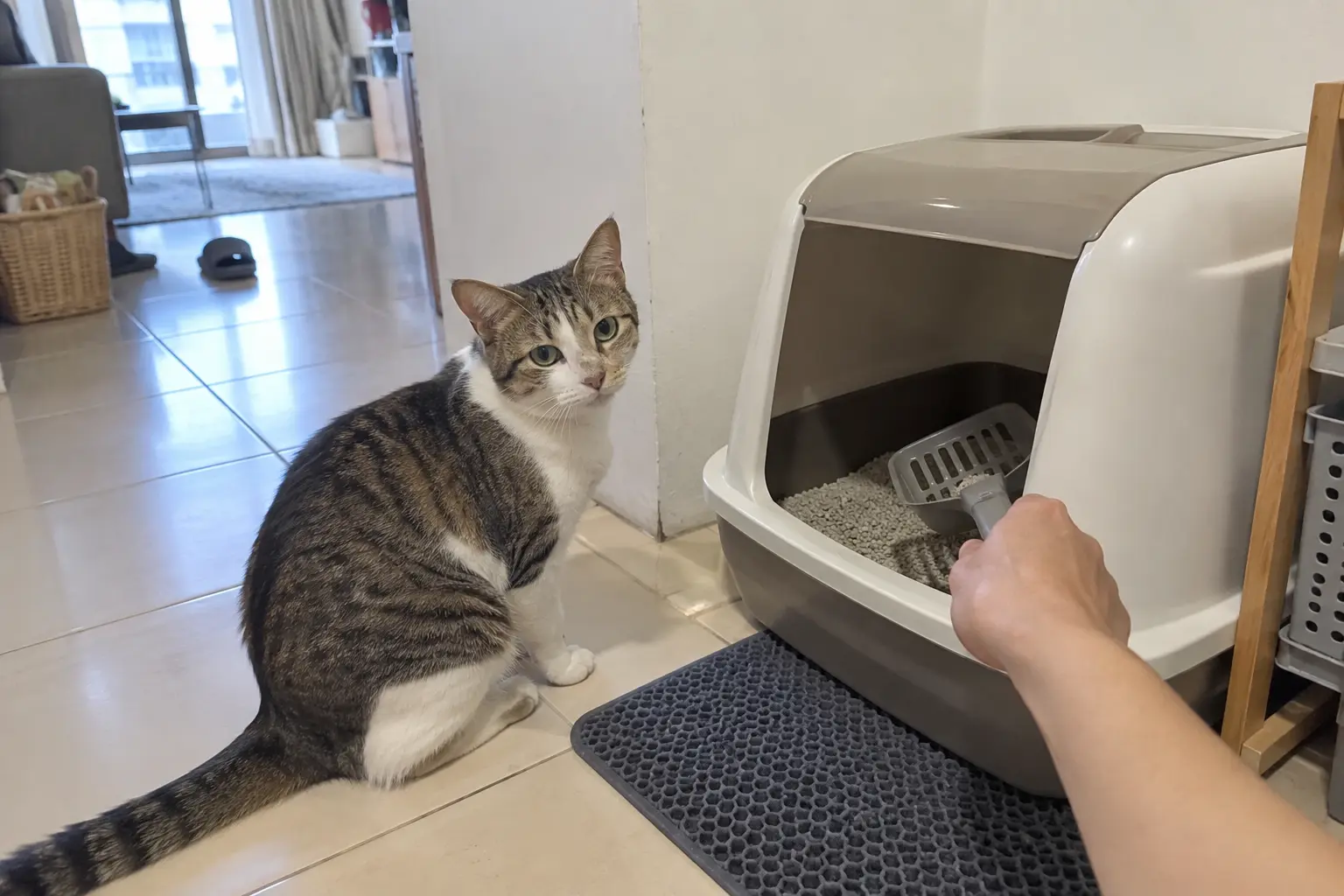
The litter box is one of the clearest windows into your cat's digestive routine. When a normally formed stool becomes soft, sticky or difficult to scoop, do not rush to add several remedies at once.
First ask: Is this one unusual stool, or is a pattern beginning?**
The 30-Second Answer
- Observe closely: one mildly soft stool, with normal appetite, water intake, energy and behaviour.
- Call your veterinarian: watery or repeated diarrhoea, blood or black stool, vomiting, pain, poor appetite, lethargy, dehydration or weight loss.[1]
- Act sooner: for kittens, frail seniors or cats with another illness.
For an otherwise stable cat, this is where a consistent digestive routine can help. FURVIN PreProZyme combines probiotics, inulin prebiotic and five digestive enzymes in one measured daily serving to support the system behind stool quality.
What Stage Is Your Cat's Stool?
Use the closest score rather than waiting for a perfect match. Scores 4–5 are the soft-stool zone. Scores 6–7 move into diarrhoea. Recording a change such as 3 → 5 is also clearer than writing “a bit soft” when you speak with your veterinarian.[7]
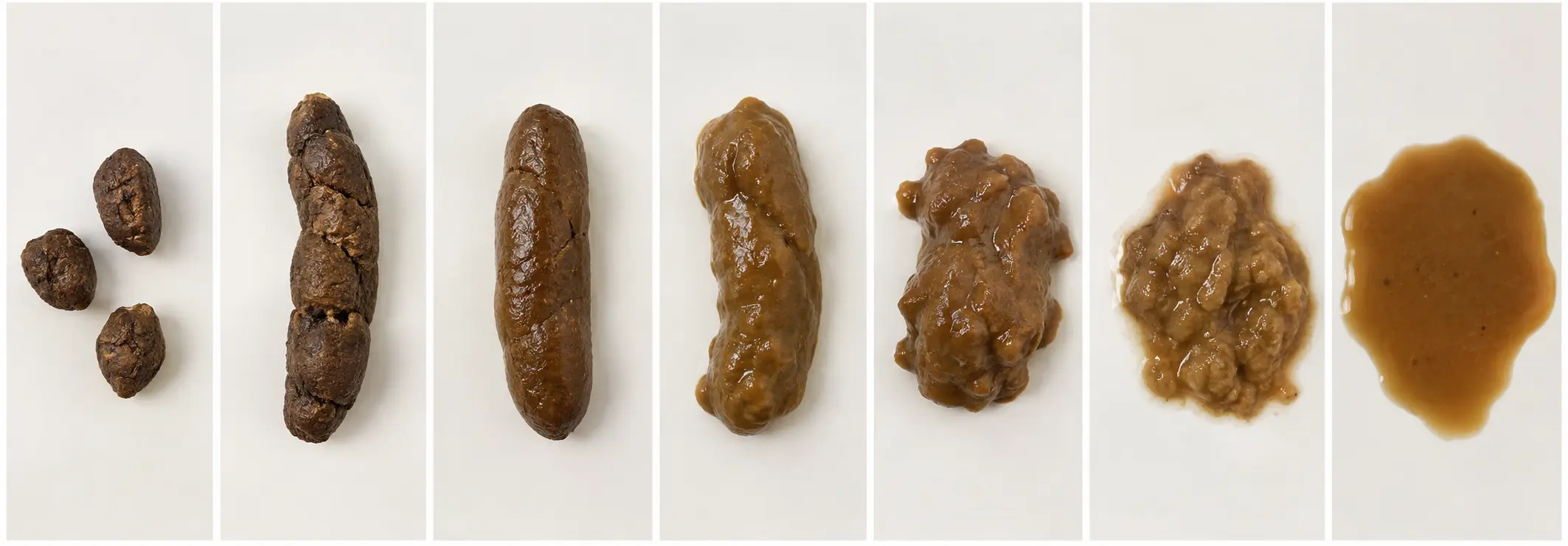
On mobile, swipe the image to compare all seven stages →
Small, separate, dry pellets. If this repeats—or your cat strains—constipation needs attention.
Firm to gently moist, holds its shape and is usually easy to scoop.
Very moist; the shape becomes less defined or sits in a soft pile and leaves residue.
Unformed to fully watery. Repeated episodes—or blood, vomiting, weakness or poor appetite—need veterinary advice.
Soft Stool Is a Sign, Not a Diagnosis
“Soft stool” can mean formed-but-soft, pudding-like, or fully watery. Mucus, fresh blood, a black tar-like appearance or a sudden change in frequency adds information your veterinarian may need.
Stool consistency reflects several things happening together: the food eaten, the speed of intestinal passage, water absorption, digestion, the microbial environment and the cat's wider health.
7 Common Reasons It Happens
- 1. Food changed too quickly. A sudden switch changes what reaches the digestive tract before the cat has time to adapt.
- 2. Treats and rich extras added up. Lickable snacks, table food and toppers can quietly change total fat, fibre, protein sources and portion size.
- 3. Stress disrupted the routine. Boarding, visitors, renovation noise, a new animal or a different feeding schedule can coincide with digestive changes.
- 4. The diet does not suit this cat. A particular ingredient or overall diet may not suit an individual cat, but a proper veterinary diet trial is more useful than random weekly switching.
- 5. Parasites or infection are involved. Gastrointestinal parasites can cause diarrhoea, mucus, blood, vomiting and appetite changes; appearance alone cannot identify the cause.[2]
- 6. Medication affected the gut. Antibiotics and other medicines may change gastrointestinal function. Do not stop prescribed medicine without asking the veterinarian who prescribed it.
- 7. An underlying condition needs attention. Persistent diarrhoea can occur with inflammatory, pancreatic, liver, kidney, endocrine or other medical conditions.[1]
This is why “firming the poop” is not always enough. If the pattern repeats, finding the reason matters.
What to Do Today
Keep the base diet steady
If your cat is otherwise well, avoid reacting with a sudden food change. Consistency gives you a clearer baseline.
Change one thing at a time
Do not start a new food, three treats and two supplements together. If the stool changes, you will not know which change mattered.
Start new routines gently
Follow the product directions. For a picky or sensitive cat, introduce a supplement below the full serving and build gradually rather than starting with a heavy mix.
Record the next seven days
Note stool consistency and frequency, food, treats, supplement serving, vomiting, appetite, drinking and energy. Do not wait seven days if diarrhoea becomes watery, frequent or comes with warning signs.
Why Gut Support Makes Sense
Research has found measurable differences between the faecal microbiomes of healthy cats and cats with acute or chronic diarrhoea.[3] That shows the microbiome belongs in the digestive conversation—but it does not prove that “gut imbalance” is the cause of every soft stool.
A 2025 systematic review found favourable gastrointestinal findings across some probiotic, prebiotic, synbiotic and postbiotic interventions in cats, while also highlighting differences between studies and products.[4] A placebo-controlled study in fostered shelter kittens also reported a lower incidence of diarrhoea with one specific feline-origin probiotic under those study conditions.[5]
The responsible takeaway is simple:
Prebiotics have a different role. In a small study of eight healthy adult cats, dietary inulin changed selected faecal microbial and immune measures over 21 days.[6] The study supports inulin's relevance to the feline microbial environment; it was not a clinical trial of PreProZyme or a treatment study for diarrhoea.
Where FURVIN PreProZyme Fits
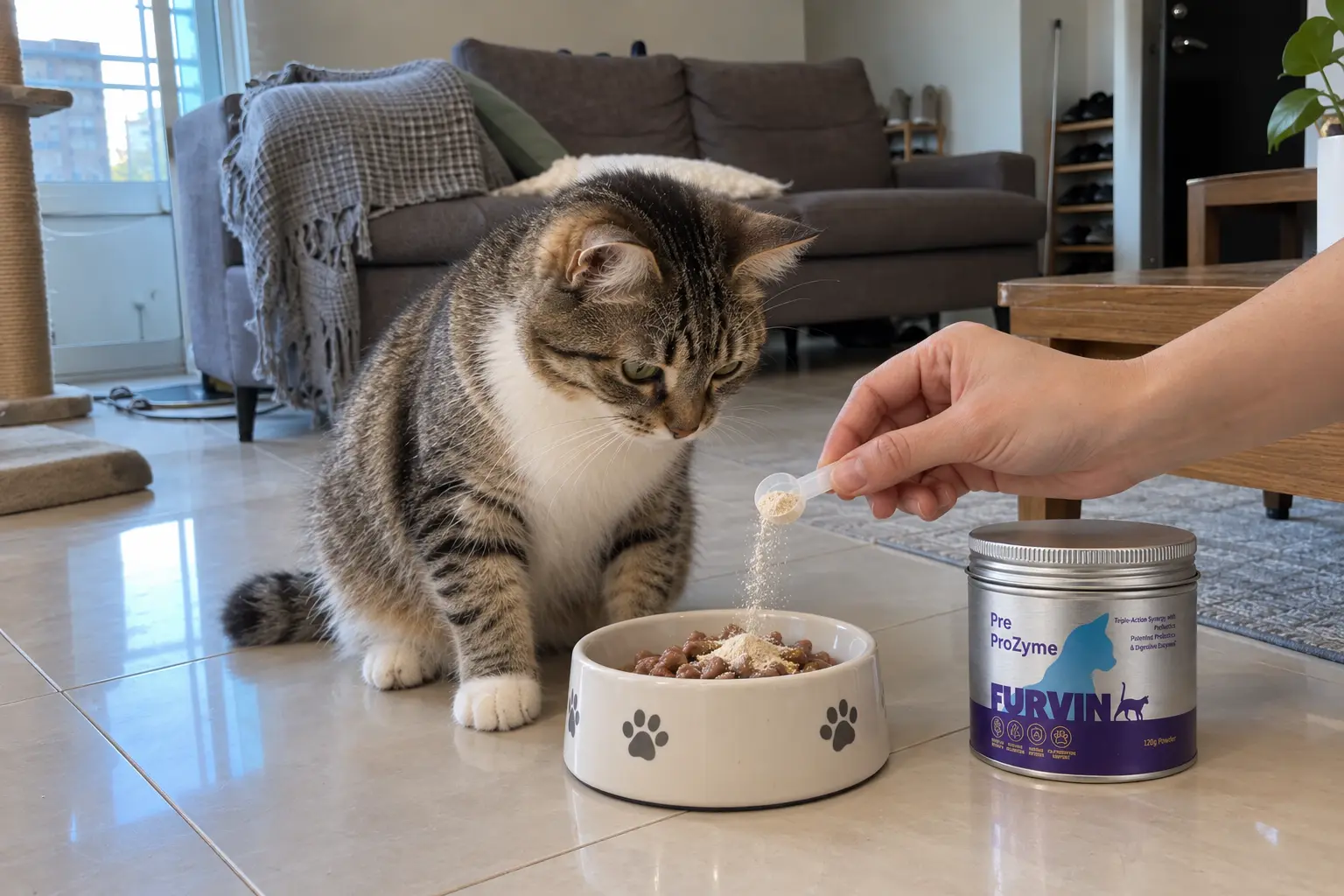
PreProZyme is built for cat parents who want one repeatable digestive-wellness routine instead of several disconnected products.
5.5 Billion CFU probiotics per 5 g serving
To support the intestinal microbial community as part of everyday digestive wellness.
Inulin prebiotic
To support the microbial environment—not merely add more microorganisms.
Five digestive enzymes
Protease, cellulase, lipase, bromelain and papain support the breakdown of food components.
Pumpkin and apple fibre
These ingredients complete the formula's fibre side within the wider daily routine.
The value is a clear, measured way to support the digestive system around the stool—especially for cat parents who want a consistent daily routine instead of waiting for the next soft-stool episode. It can also complement a veterinarian-guided plan.
When It Should Not Wait
Contact a veterinarian promptly if you notice:
- watery, severe or repeated diarrhoea
- fresh blood or black, tar-like stool
- repeated vomiting
- marked weakness, lethargy or pain
- poor appetite or inability to keep water down
- dehydration or weight loss
- very pale, greasy or unusually large-volume stool
- a kitten, frail senior or medically vulnerable cat becoming unwell
Recurring stool changes may require a physical examination, faecal testing, blood work or other investigation. A supplement should never delay needed care.
Frequently Asked Questions
Is one soft stool an emergency?
Not necessarily. Consider how soft it was, whether it happens again and how your cat is behaving. Seek veterinary advice sooner for watery or repeated diarrhoea, blood, vomiting, poor appetite, lethargy, dehydration, pain or weight loss.
Can changing food too quickly cause soft stool?
Yes. A sudden change alters what reaches the digestive tract. When the change is optional, transition gradually and avoid introducing several new foods, treats or supplements together.
Can stress cause soft stool in cats?
It can coincide with gastrointestinal changes in some cats. Consider recent changes at home, boarding or feeding times. Recurring signs still deserve investigation because stress is only one possible explanation.
Can probiotics help with soft stool?
Yes. Selected probiotics have supported stool-related outcomes in feline studies.[4][5] Because results depend on the microorganism, amount and situation, choosing a clearly formulated product—and using it consistently—matters.
FURVIN PreProZyme combines 5.5 Billion CFU probiotics with inulin and five digestive enzymes, so one daily routine supports more than one part of digestion.
Can I give PreProZyme when my cat has soft stool?
Yes—when your cat is otherwise bright, eating and drinking normally, PreProZyme can be added as daily digestive support. Its probiotics support the intestinal microbial community, inulin supports the microbial environment, and five digestive enzymes support food breakdown.
Start with a smaller amount, mix it well into familiar food and build gradually to the full 5 g daily serving. If the stool is watery, bloody, keeps recurring, or comes with vomiting, weakness or poor appetite, contact a veterinarian.
Can I use PreProZyme every day?
Yes. PreProZyme is designed for daily use at 5 g—one scoop a day. Consistent use is more meaningful than reacting only after stool becomes soft. Introduce it gradually, mix it into familiar food and follow the current label directions.
The Bottom Line
One soft stool may be a moment. A repeated pattern is useful information.
- Identify warning signs and causes that need veterinary care.
- Keep the routine clear enough to see what changed.
- For an otherwise stable cat, support daily digestion consistently instead of reacting with random fixes.
Do not only watch the stool. Support the system behind it.
References / Sources
- Diarrhea in CatsVCA Animal Hospitals
Explains severity, accompanying clinical signs and circumstances that need prompt veterinary attention.
- Gastrointestinal Parasites of CatsCornell Feline Health Center
Reviews feline gastrointestinal parasites and nonspecific signs including diarrhoea, mucus or blood, vomiting and appetite loss.
- The Fecal Microbiome in Cats with DiarrheaPLOS ONE (2015)
Compared faecal microbiomes from healthy cats and cats with acute or chronic diarrhoea; DOI 10.1371/journal.pone.0127378.
- Efficacy of probiotic, prebiotic, synbiotic and postbiotic supplementation on gastrointestinal health in cats: systematic review and meta-analysisJournal of Small Animal Practice (2025)
Reviews feline gastrointestinal outcomes across biotic interventions; DOI 10.1111/jsap.13822; PMID 39800337.
- Randomized placebo-controlled trial of feline-origin Enterococcus hirae probiotic effects on preventative health and fecal microbiota composition of fostered shelter kittensFrontiers in Veterinary Science (2022)
A product- and population-specific controlled study; DOI 10.3389/fvets.2022.923792.
- Effects of inulin on fecal microbiota and specific immunity in catsResearch in Veterinary Science (2024)
A small study in eight healthy adult cats; DOI 10.1016/j.rvsc.2024.105252; PMID 38564887.
- Is Your Cat Having Trouble Pooping? Let's Talk ConstipationPet Nutrition at OVC, University of Guelph (2025)
Discusses recognising feline constipation and using stool appearance as part of monitoring. The FURVIN chart is an original educational visual, not a reproduction of the source chart.